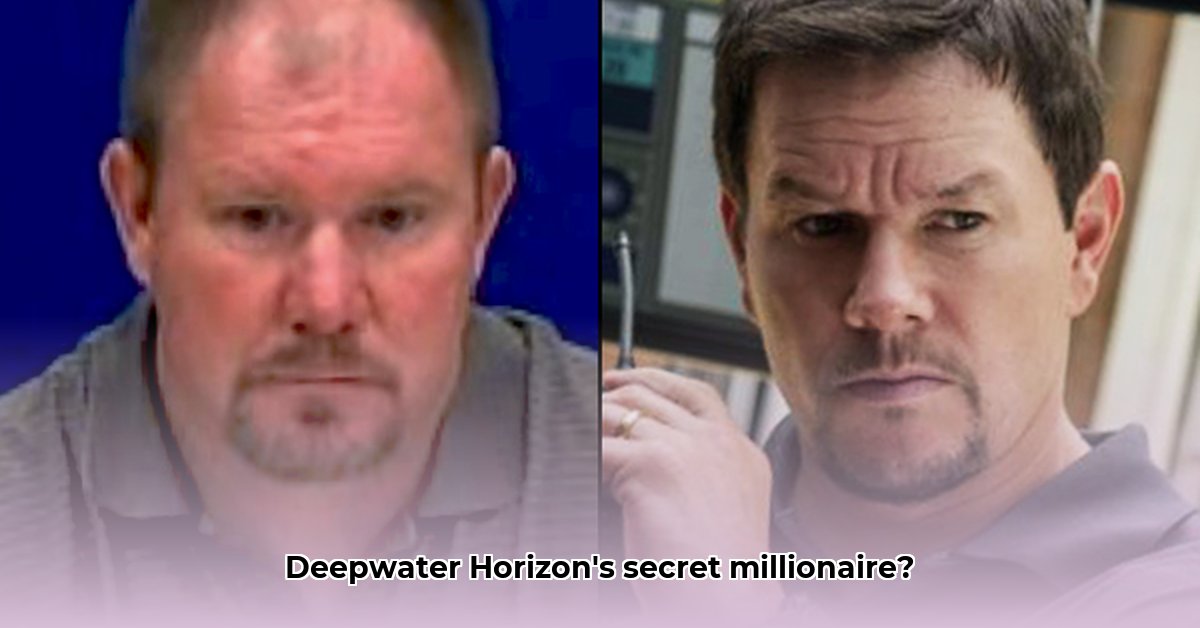
Jimmy Harrell Net Worth: A Look Beyond the Dollars and Cents of Deepwater Horizon
The Deepwater Horizon oil spill—a catastrophic event seared into global memory—brought unimaginable devastation. While billions of dollars in damages and legal battles dominated headlines, the financial impact on individuals like Jimmy Harrell, a supervisor on the rig, remains largely obscured. Determining Jimmy Harrell's net worth proves surprisingly difficult. Public records offer minimal insight into his personal finances. His story, instead, is interwoven into the larger narrative of the disaster's aftermath—a narrative far more compelling than any simple numerical representation of his wealth.
Unraveling the Mystery of Jimmy Harrell's Finances
Unlike the massive sums surrounding BP and its legal battles, pinpointing Jimmy Harrell's net worth is practically impossible. He wasn't a high-ranking executive; he was a supervisor diligently performing his duties. His income would have been commensurate with his position. Did the Deepwater Horizon disaster significantly alter his financial standing? We lack the information to definitively answer. It's highly probable, however, that his personal wealth paled in comparison to the billions of dollars in damages resulting from the oil spill.
It's reasonable to consider potential settlements. While possible, any such settlements likely didn't dramatically change his financial life. Even if he received compensation, it probably wouldn't have offset the emotional and psychological trauma. Speculating on Jimmy Harrell's precise net worth without concrete data is not only unproductive but also irresponsible. The crucial narrative isn't the size of his bank account but the human cost of the disaster and the allocation of true responsibility.
The Devastating Economic Impact of the Deepwater Horizon Spill
The explosion wasn't merely an environmental catastrophe; it triggered global economic shockwaves. BP faced massive fines and lawsuits, totaling tens of billions of dollars. This economic tsunami affected countless individuals, from investors to residents of coastal communities whose livelihoods were destroyed. However, within this vast financial landscape, Jimmy Harrell's story stands apart—it's not about monumental financial gains or losses, but about deeply human suffering.
Beyond the Bank Account: Harrell's Lasting Legacy
Harrell's experience highlights a critical point frequently overlooked: the human cost of such disasters vastly surpasses the purely economic ones. While determining Jimmy Harrell’s net worth remains improbable, his story powerfully illustrates the profound physical and psychological toll on individuals caught in the crossfire of corporate negligence. His struggles with PTSD and subsequent health issues serve as a heartbreaking reminder of the invisible wounds absent from any balance sheet. The true value lies in the individual accounts of pain and resilience, stories demanding to be heard.
Confronting the Disparity: Human Suffering vs. Corporate Accountability
This leads to a critical question: Did the financial settlements adequately address the human suffering caused by the Deepwater Horizon disaster? Frequently, the scale of cleanup efforts and legal battles overshadows the individual stories of loss. Harrell’s case starkly exemplifies this disparity. His role in the disaster is far less significant than the suffering he, and countless others, endured. His loss is immeasurable and cannot be reduced to a monetary figure.
Lessons Learned: A Deeper Understanding of Responsibility
The Deepwater Horizon disaster wasn't just a financial event; it was a profound lesson in corporate accountability, regulatory oversight, and unwavering human resilience. The focus shouldn't solely be on economic fallout, but on preventing future tragedies and genuinely valuing human life above profit. While the mystery of Jimmy Harrell’s net worth persists, this doesn't diminish the power of his story. It adds a layer of poignant reality to the overarching financial narrative of the disaster. His experience compels us and future generations to confront the human cost of negligence. It’s a stark reminder that sometimes, the most significant numbers aren't found in a bank account.
How Did Deepwater Horizon Impact Offshore Drilling Safety Regulations?
Key Takeaways:
- The Deepwater Horizon disaster triggered immediate regulatory changes, including a moratorium on deepwater drilling and the formation of a new regulatory body.
- Enhanced safety protocols and stricter well design standards were implemented.
- The long-term impact of regulatory changes remains a subject of debate, particularly considering subsequent administrations' actions.
- The disaster highlighted the ongoing tension between energy development and safety.
- Robust, consistent, and adaptable regulations are crucial for future prevention.
The 2010 explosion on the Deepwater Horizon rig served as a watershed moment. It wasn't just a tragedy; it was a wake-up call. The immense loss of life and environmental devastation demanded a reckoning. How did Deepwater Horizon impact offshore drilling safety regulations? The answer is multifaceted, a complex interplay of immediate response and long-term consequences.
Immediate Aftermath: A Scramble for Reform
The immediate response was swift and decisive. Drilling operations came to a halt. The Minerals Management Service (MMS), the agency overseeing offshore drilling, was perceived as failing in its duty and was subsequently replaced by the Bureau of Ocean Energy Management, Regulation, and Enforcement (BOEMRE). A six-month moratorium on deepwater drilling was implemented. This wasn't merely about damage control; it was about gaining time to reassess and reform. The magnitude of the disaster necessitated a complete overhaul.
New Rules, New Standards
Subsequent regulatory changes were significant. Blowout preventer (BOP) requirements were strengthened. New, more rigorous well design standards were established, emphasizing enhanced safety protocols at every stage of the process, from initial exploration to final decommissioning. These measures aimed to prevent a recurrence of the catastrophic failures that led to the Deepwater Horizon disaster.
Long-Term Impacts: A Balancing Act
The long-term effects of these regulatory changes are more subtle. While the Obama administration implemented sweeping reforms, subsequent administrations adopted varied approaches. Some attempts to roll back regulations have sparked considerable debate, highlighting the ongoing tension between the need for energy production and ensuring worker and environmental safety. Did these actions adequately address long-term concerns? This question remains a topic of ongoing discussion among experts and advocates. The debate itself highlights the persistent uncertainty and the continuous need for effective oversight.
The Human Cost: Beyond Regulations
Beyond the regulatory changes, the Deepwater Horizon disaster underscored the profound human cost—a critical element often overlooked in discussions about regulations. Lives were lost, families were shattered. This impact extended far beyond economic and environmental concerns. Although regulations aim to mitigate future risks, they can't fully compensate for the immense human loss. Considering these human elements is crucial to understanding the regulatory changes.
Looking Ahead: A Constant Evolution
The legacy of the Deepwater Horizon disaster compels continued vigilance. The tragedy serves as a stark reminder of the potential dangers of offshore drilling and the necessity of strong, consistently enforced regulations. The industry, regulatory bodies, and policymakers must remain dedicated to expanding upon existing safeguards, adapting to new technologies, and ensuring that such a disaster never recurs. The need for adaptable, comprehensive regulations remains paramount. The ongoing evolution of safety standards demonstrates the lasting impact of this devastating event.